A pickleball bag helps keep paddles, balls, shoes, water, and other gear organized and easy to carry. However, not every player needs the same type of bag.
Size, storage layout, comfort, materials, and durability all affect how practical a bag is in daily use. This guide explains the key things to know before choosing a pickleball bag.
What Is a Pickleball Bag?
Pickleball is a paddle sport that combines elements of tennis, badminton, and table tennis. It is played with a paddle and a lightweight plastic ball, and can be played both indoors and outdoors.
A pickleball bag is simply a bag made for carrying the things you need to play pickleball, such as paddles, balls, water, shoes, and a few personal items.
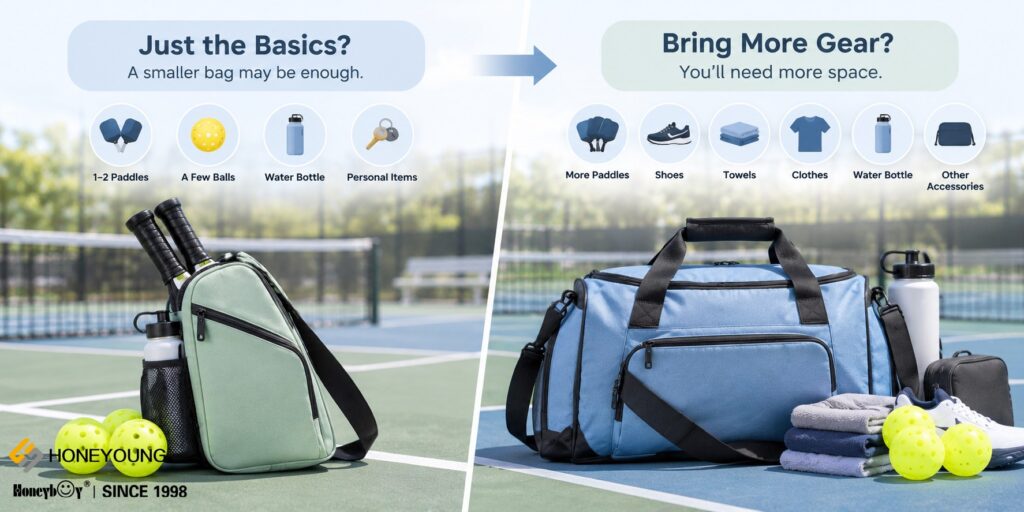
If you are just starting to play, you may only need a small bag for one or two paddles. As you play more often, you may want extra space for shoes, towels, bottles, and other gear. That is why pickleball bags come in different sizes and styles.
Common Types of Pickleball Bags
Pickleball bags come in several common styles. The main difference is how much gear they can hold and how you prefer to carry them.
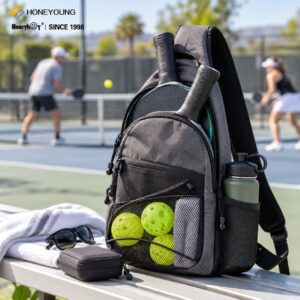
Sling Bags
Sling bags are small and lightweight. They usually hold one or two paddles, a few balls, and some personal items.
They are a good choice for casual players who do not need to carry much gear.
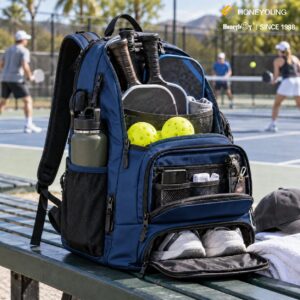
Backpacks
Pickleball backpacks offer more space and are easier to carry for longer periods.
They can usually hold several paddles, balls, a water bottle, and other accessories. Some also include separate space for shoes or clothing.
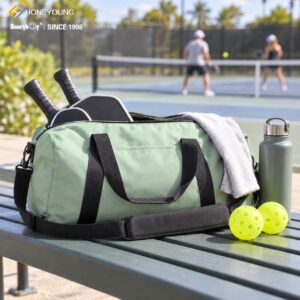
Duffel Bags
Duffel bags provide a larger main compartment, making them useful if you carry shoes, towels, extra clothes, or more equipment.
They are often a better choice for players who spend more time at the court.
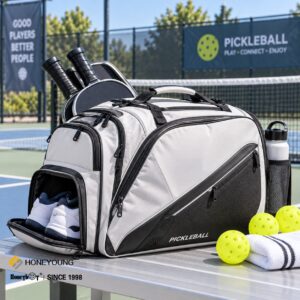
Tournament Bags
Tournament bags are designed for players who need to carry more gear.
They may include multiple paddle compartments, shoe storage, extra pockets, and space for clothing, food, and other items needed for a full day of play.
| Feature | Sling Bag | Backpack | Duffel Bag | Tournament Bag |
| Best For | Casual players, beginners | Regular players, everyday use | Players carrying shoes, clothes, and extra gear | Tournament and all-day players |
| Capacity | ⭐⭐ | ⭐⭐⭐⭐ | ⭐⭐⭐⭐ | ⭐⭐⭐⭐⭐ |
| Comfort | ⭐⭐⭐ | ⭐⭐⭐⭐⭐ | ⭐⭐⭐ | ⭐⭐⭐⭐ |
| Organization | ⭐⭐ | ⭐⭐⭐⭐ | ⭐⭐⭐ | ⭐⭐⭐⭐⭐ |
| Portability | ⭐⭐⭐⭐⭐ | ⭐⭐⭐⭐ | ⭐⭐⭐ | ⭐⭐ |
| Main Advantage | Light and easy to carry | Good balance of space and comfort | Large and flexible main compartment | Maximum storage and organization |
| Main Limitation | Limited storage space | Can feel bulky when fully packed | Less convenient for long carries | Larger and heavier |
- There is no single bag type that works best for everyone.
At Honeyoung, we recommend choosing based on your actual needs: a smaller bag may be enough for beginners, while regular or tournament players may need more space and better organization.
What Size Pickleball Bag Do You Need?
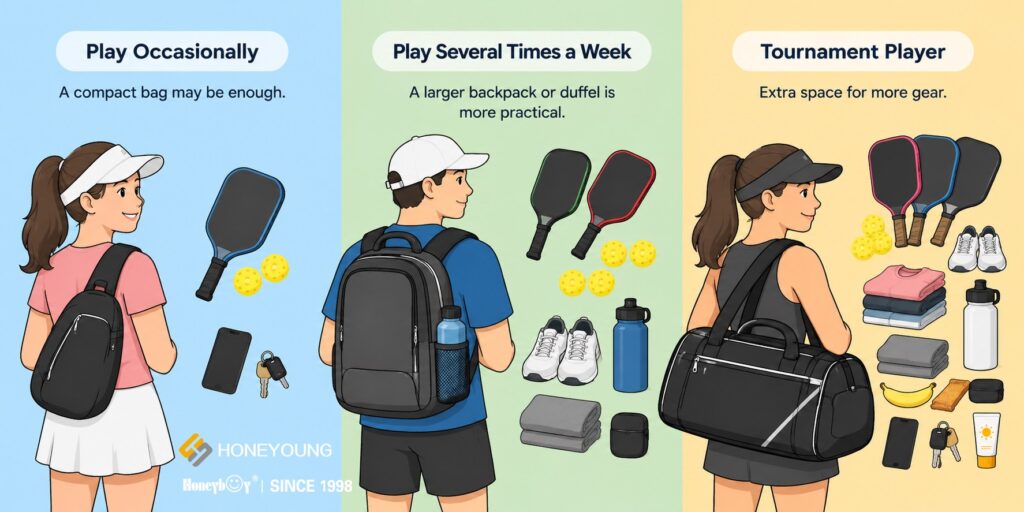
The right size depends mostly on how much gear you usually bring to the court. If you only carry one or two paddles, a few balls, and a water bottle, a smaller bag may be enough. If you also bring shoes, towels, clothes, or extra paddles, you will need more space.
Choose by How Much Gear You Carry
Before looking at liters or bag dimensions, think about what you normally carry. A casual player may only need the basics, while someone who plays several times a week may need space for more gear and personal items.
Paddle Capacity
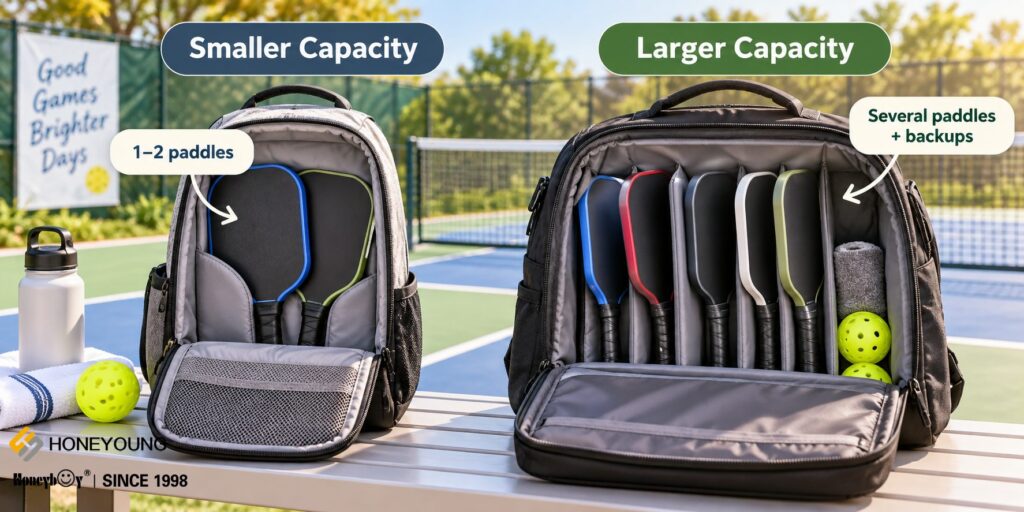
Paddle capacity is another simple way to judge bag size. Some bags are designed for one or two paddles, while larger bags can hold several paddles and backups.
It is better to leave a little extra room instead of packing paddles too tightly, especially if the compartment is padded.
Why Internal Layout Matters
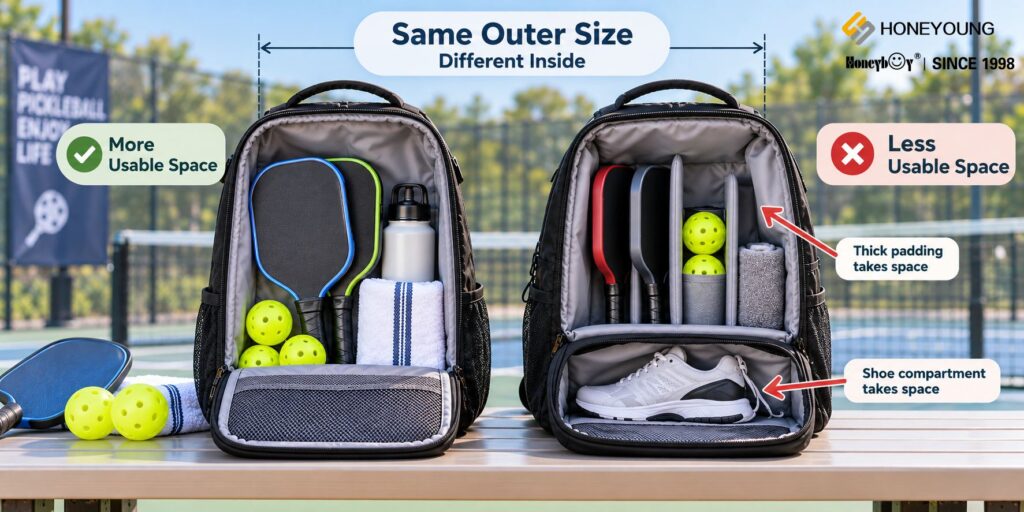
Two bags with a similar overall size can feel very different inside. A shoe compartment, thick padding, or several dividers can take up part of the usable space.
So, when choosing a pickleball bag, do not look only at the outer size or capacity. The way the inside is divided is just as important.
What Features Actually Matter in a Pickleball Bag?
Once you start playing more often, you may notice that bag size is only part of the story. A large bag can still be frustrating if the inside is poorly organized, while a smaller bag can work very well if everything has a clear place.
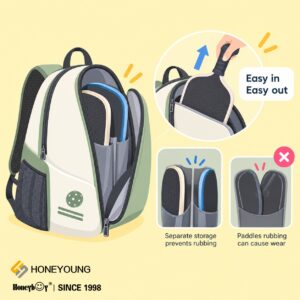
A Good Paddle Compartment
- A paddle pocket alone is not always enough. It should make paddles easy to take in and out while keeping them separate from other gear.
- Dividers can also reduce rubbing, especially for paddles with textured surfaces.
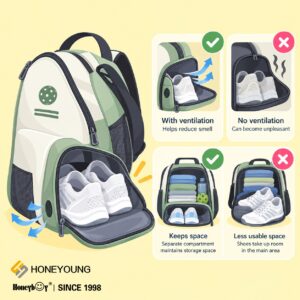
A Shoe Compartment
- A separate shoe compartment is useful, but it should not create new problems.
- Good ventilation helps reduce odor without taking up too much main storage space.
- So when choosing one, check both ventilation and usable storage space.
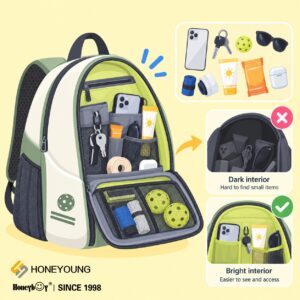
Easy Access Is More Important
- More pockets do not always mean better organization. A simple, clear layout makes small items easier to find.
- Many players also prefer a bright interior lining because it makes small items easier to see.
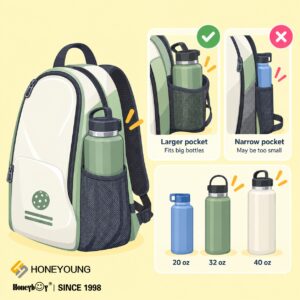
Don’t Forget the Water Bottle
- Water bottle pockets can be more important than they seem.
- A narrow pocket may not fit larger 32 oz or 40 oz bottles, so many players prefer a wider, more secure holder.
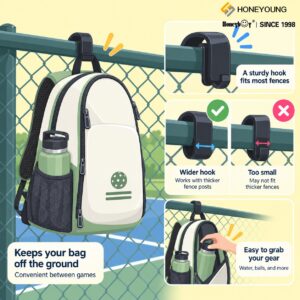
A Fence Hook Can Be More Useful
- Pickleball is often played on fenced courts, where there may not be a clean place to set your bag.
- A fence hook keeps the bag off the ground and makes gear easier to reach.
- The hook should also be large and strong enough to fit different court fences.
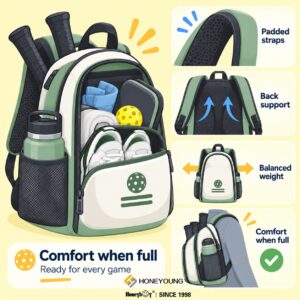
The Bag Should Still Be Comfortable
- An empty bag may feel comfortable, but the real test is how it feels when fully loaded.
- A good pickleball bag should focus on useful features that make carrying easier, not simply add more pockets.
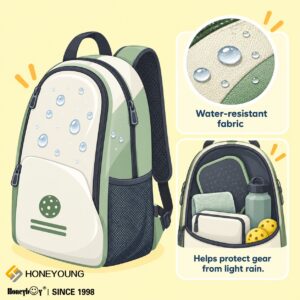
Water Resistance
- Most players do not need a completely waterproof bag, but some water resistance is useful.
- A coated fabric can help protect paddles, clothes, and personal items from light rain or a wet court surface.
The main idea is simple: useful features should make the bag easier to live with, not just make the feature list longer. A good pickleball bag does not need every possible pocket or accessory—it needs the right ones for the way you actually play.
A Few Practical Tips Before You Choose
By this point, the choice becomes much easier. Instead of looking for the bag with the most features, start with how you actually play and what you normally bring to the court.
Start With Your Playing Routine
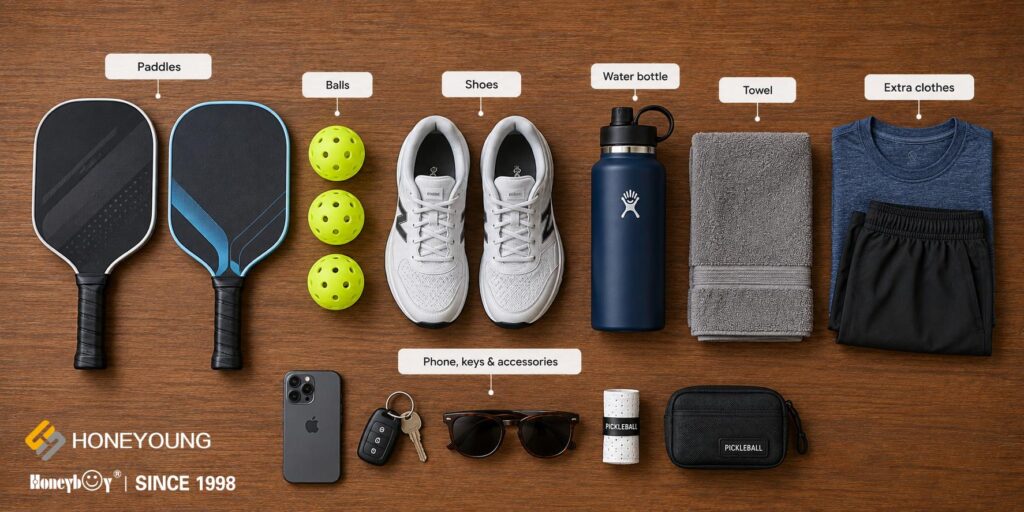
Think about how often you play and how much gear you usually bring. Occasional players can keep things simple, while regular or tournament players may need more room for shoes, extra paddles, clothing, and other essentials.
Choose a bag that matches your routine rather than simply going for the biggest one.
Think About What You Carry Most Often
Make a simple list of the gear you normally take:
This is often more useful than choosing a bag only by its listed capacity.
Leave a Little Extra Space
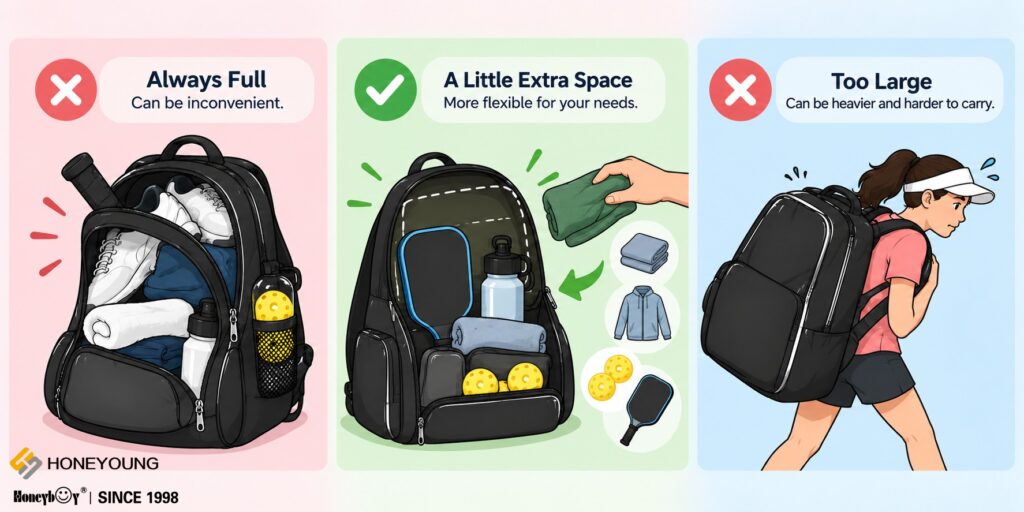
A bag that is always full can be inconvenient, while a little extra room gives you more flexibility for daily use. But going too large can also make the bag heavier and less comfortable to carry.
Choose a size that fits your usual gear, with just enough extra space for a few additional items when needed.
In the end, the right pickleball bag is the one that fits your normal gear, your playing routine, and the way you move to and from the court. You do not need the biggest or most complicated bag—just one that makes your time on the court easier.
FAQ
Can I use a regular backpack for pickleball?
Yes. A regular backpack can work well for casual play, especially if you only carry one or two paddles, a few balls, and a water bottle.
However, a dedicated pickleball bag usually provides better paddle storage, easier access, and more useful organization for shoes and smaller accessories.
Can I use a tennis bag for pickleball?
Yes, a tennis bag can also be used for pickleball.
The main difference is that tennis bags are designed around longer rackets, so some of the space may not be used efficiently for shorter pickleball paddles.
A pickleball-specific bag is usually more compact and better organized for paddles, balls, shoes, and personal items.
Do I really need a separate shoe compartment?
Not necessarily. A separate shoe compartment is most useful if you regularly change shoes at the court or want to keep dirty footwear away from clean clothing and other gear.
If you choose one, check that it has enough ventilation and does not take up too much usable space inside the main compartment.
Should a pickleball bag be waterproof?
For most players, a completely waterproof bag is not necessary. Water-resistant fabric is usually enough to handle light rain, splashes, or a damp court surface.
If you often play outdoors, it is also worth checking the zippers and bottom panel, because water can enter through these areas even when the main fabric is water-resistant.
How do I keep a pickleball bag from smelling?
The easiest way is to remove damp shoes, towels, and clothes soon after playing instead of leaving them inside the bag.
Let the bag air out with the compartments open, especially after hot or humid sessions. Ventilated shoe pockets and linings that are easy to wipe clean can also make odor control much easier.
How do I clean a pickleball bag?
Start by emptying every compartment and shaking out dust, dirt, and small debris. For most bags, wiping the interior and exterior with a damp cloth and mild soap is enough for regular cleaning.
Avoid using harsh chemicals unless the care label allows them, and let the bag dry completely before storing or using it again.
For more detailed cleaning methods, you can also read our The Ultimate Guide to How to Wash a Backpack.
Is a bigger pickleball bag always better?
No. A larger bag gives you more flexibility, but it can also become heavier, bulkier, and less comfortable to carry.
It is usually better to choose a size that fits your normal gear comfortably while leaving a little extra room for occasional items such as an extra towel, jacket, or paddle.