
Packing a backpack for a day hike may seem simple, but bringing the right items—and knowing where to place them—can make a big difference in comfort, balance, and convenience on the trail.
For beginners, the goal is not to fill your backpack with everything you might need. It is to prepare according to the length of the hike, weather, trail conditions, and your personal needs, while keeping the load practical and easy to carry.
In this guide, we’ll explain what to bring, how to organize your backpack, how to distribute weight properly, and what to check before you head out.
- This guide focuses only on day hikes that start and finish on the same day, with no overnight stay.
Plan Your Day Hike Before Packing
Before you start packing your backpack, understand what kind of day hike you are preparing for.
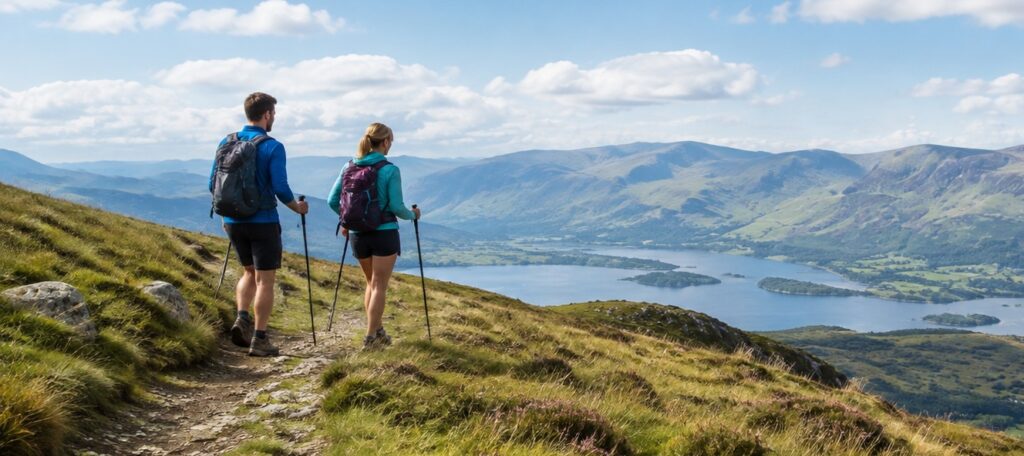
A short two-hour walk on a familiar trail is very different from a full-day hike in the mountains. The length of the route, weather, terrain, altitude, access to water, and distance from populated areas can all affect what you need to carry.
Planning these details helps you avoid two common problems: bringing too much unnecessary gear or leaving important items behind.
1. Consider the Length of Your Hike
The longer the hike, the more carefully you need to plan your water, food, clothing, and emergency supplies.
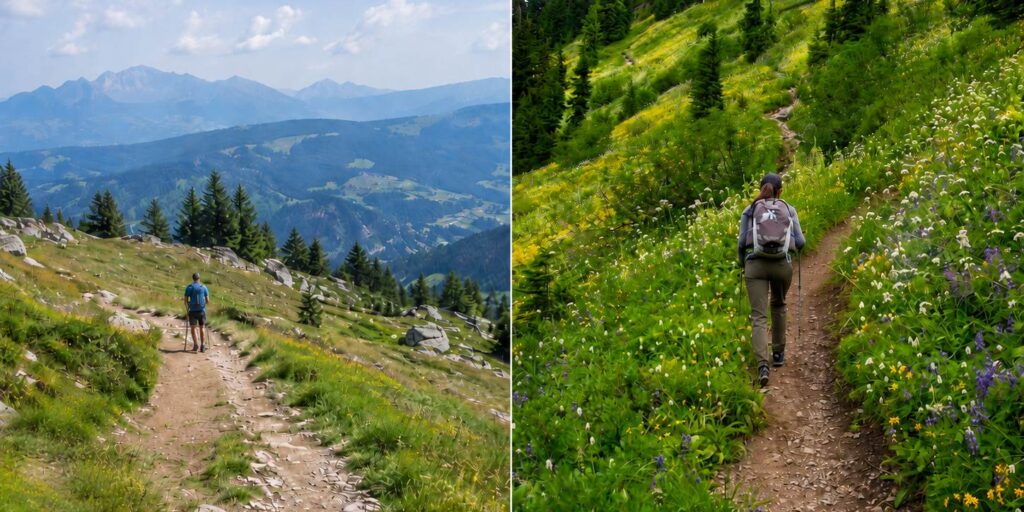
For a short hike, you may only need basic essentials such as water, snacks, sun protection, and a few safety items. For a longer full-day hike, you may need extra food, more water, additional clothing layers, navigation tools, and backup lighting.
Since this guide focuses on non-overnight day hikes, the goal is still to keep your pack relatively light rather than carrying camping equipment.
2. Check the Trail and Environment
Different hiking environments require different preparation.
Before packing, consider whether the trail includes steep climbs, high-altitude areas, dense forests, exposed terrain, or remote sections with limited phone signal.
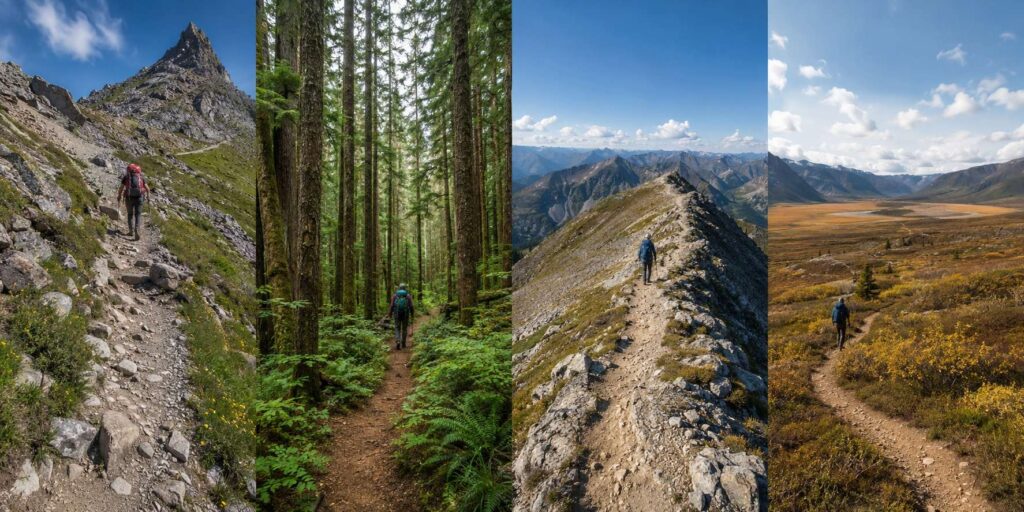
For example, a mountain hike may require extra wind or cold protection, while a forest trail may make insect protection more important. In remote areas, navigation and emergency equipment become even more important.
3. Check the Weather
Always check the weather forecast before deciding what goes into your backpack.
Temperature, rain, wind, and sun exposure can change what you need to carry. Even when the weather looks good at the starting point, conditions can change quickly during a longer hike, especially in mountainous areas.
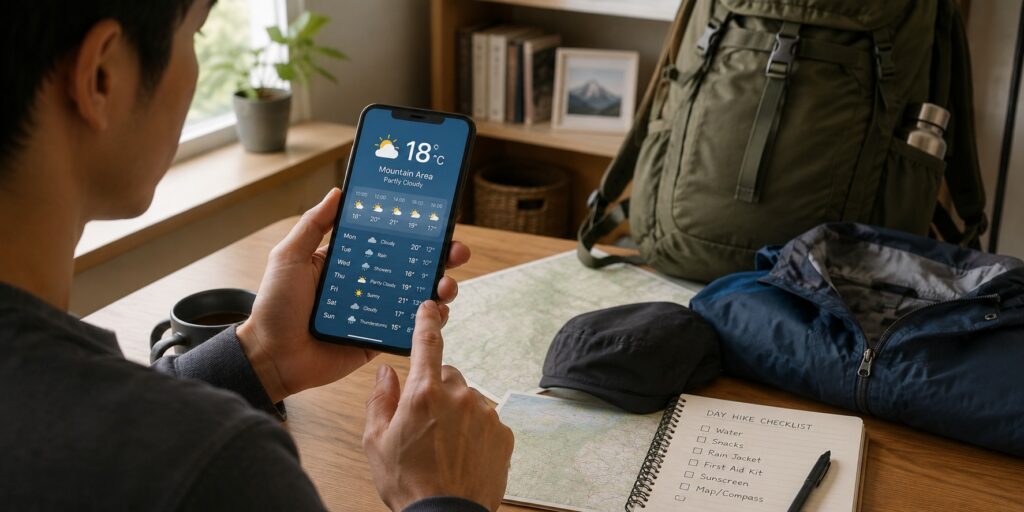
Checking the forecast before you leave helps you choose the right clothing, rain protection, sun protection, and amount of water without packing unnecessary extras.
What to Pack for a Day Hike
Once you understand the route, weather, and hiking conditions, the next step is deciding what actually needs to go into your backpack.
Your exact packing list will vary depending on the length of the hike, climate, trail difficulty, and personal needs, but most day hikers should consider the following categories.
1. Water and Food 🥪 🥛 🍫
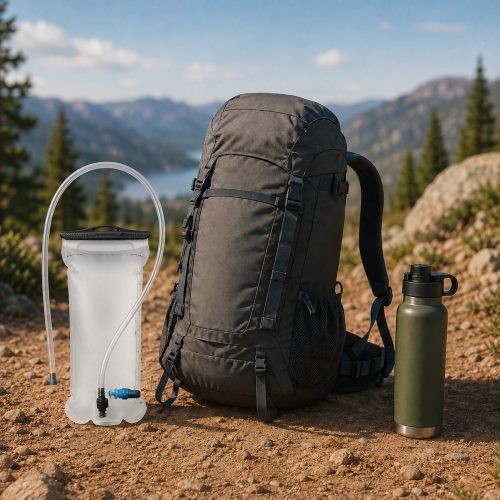
- Water is essential for any day hike.
- Use a water bottle or hydration bladder based on your preference.
- Adjust the amount according to the weather, hike length, trail difficulty, and available water sources.
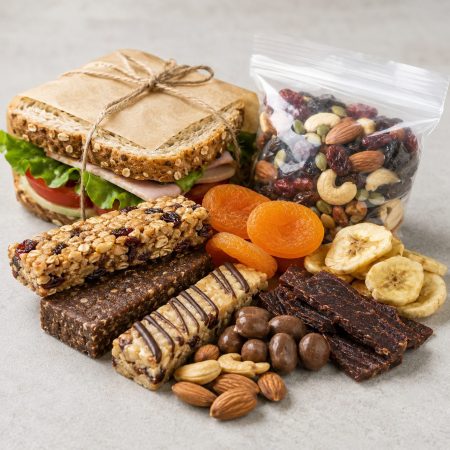
- Choose lightweight, easy-to-eat foods such as energy bars, nuts, dried fruit, or sandwiches.
- For longer day hikes, bring enough to stay energized, but avoid overpacking food.
2. Clothing and Weather Protection 👕 👖 🧤
Even on a day hike, weather conditions can change.
Depending on the forecast and hiking environment, consider packing:
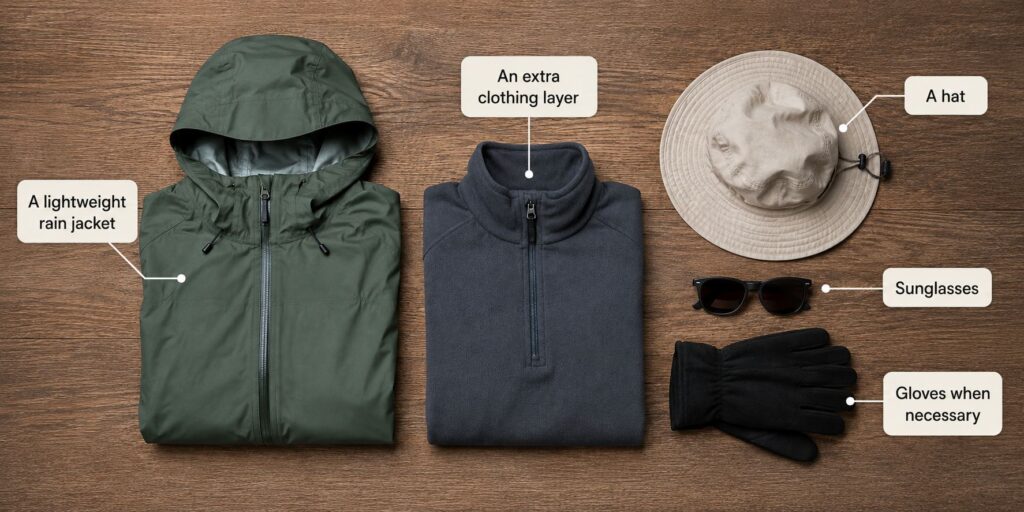
- The key is to carry versatile layers rather than too many separate pieces of clothing.
3. Navigation and Communication 🧭 🗺️ 📱
Navigation becomes more important when hiking unfamiliar or remote trails.
Useful items may include:
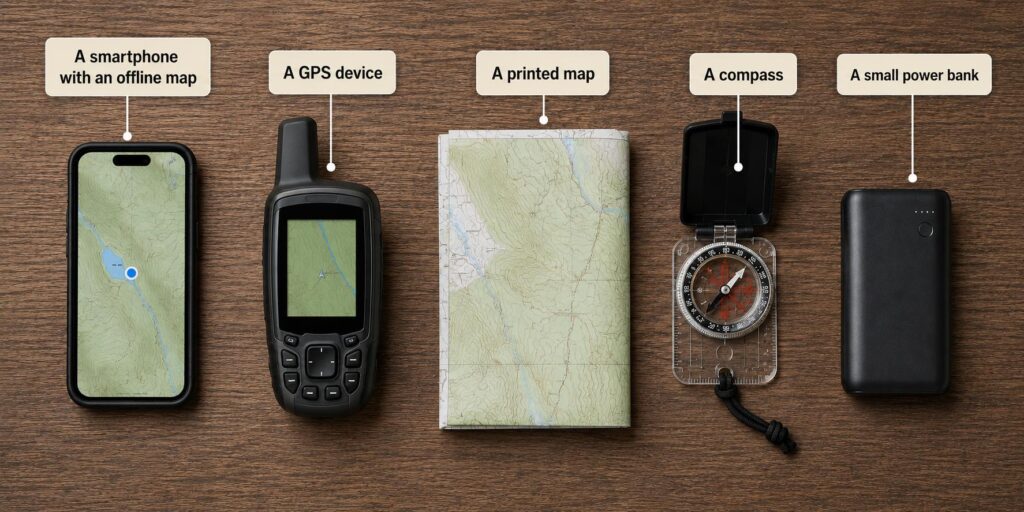
- Your phone is also an important communication tool, but you should not assume that mobile signal will always be available.
- For longer or more remote hikes, a small power bank can also be useful.
4. Safety and Emergency Items 🩹 ⛑️ 🔦
A day hike does not require the same emergency equipment as an overnight backpacking trip, but carrying a few basic safety items is still a good idea.
Consider bringing:
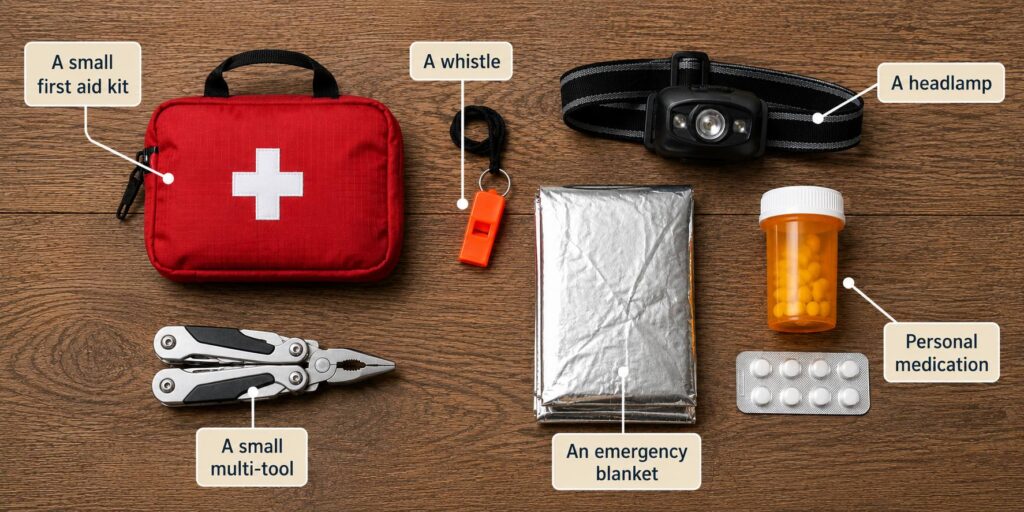
- A headlamp can be especially useful even if you plan to return before dark, since delays on the trail can happen.
5. Sun and Insect Protection ☀️ 🕶️ 👒
Sun exposure can be significant during several hours outdoors, especially on open trails or at higher elevations.
Useful items include:
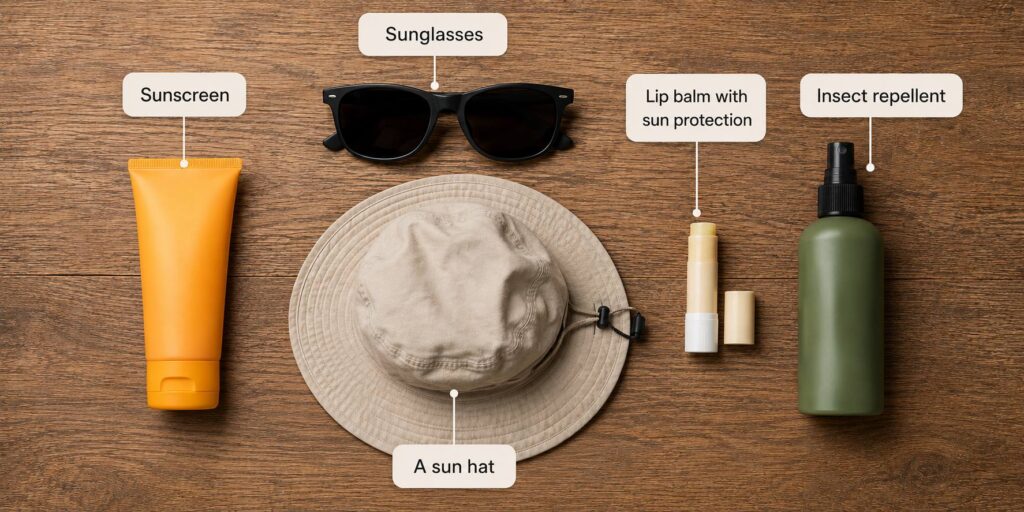
- In forests, humid areas, or during certain seasons, insect repellent may also be worth carrying.
6. Personal Items 👛 🔑 📷
Finally, pack only the personal items you realistically need.
These may include:
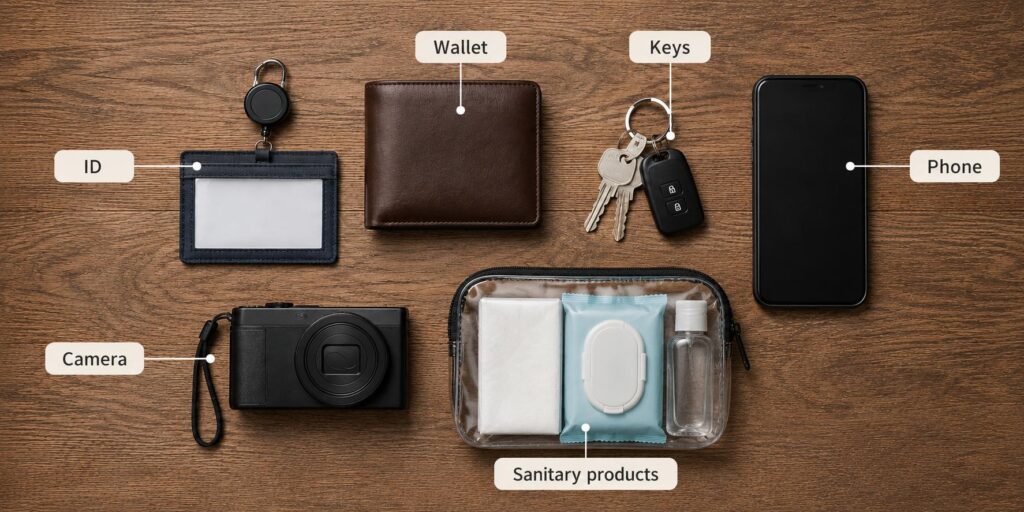
- Avoid filling your backpack with unnecessary everyday items. For a day hike, every extra item adds weight, so it helps to keep this category simple.
The best day-hike packing list is not the longest one. It is the one that gives you enough food, water, weather protection, navigation, and basic safety support without making the backpack unnecessarily heavy.
How to Organize a Backpack for a Day Hike
Once you know what to bring, the next step is deciding where everything should go.

For a day hike, you do not need a complicated packing system. A simple approach is to organize your gear according to weight and how often you expect to use it.
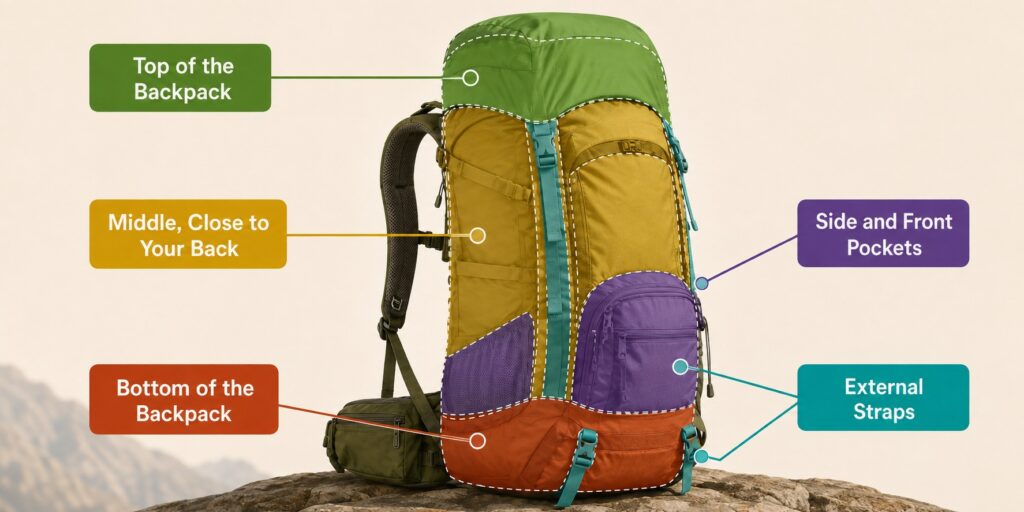
| Backpack Area | What to Pack | Why |
| Bottom of the Backpack | Extra clothing, lightweight insulating layer, emergency blanket | • Soft items • Lightweight gear • Less frequently used |
| Middle, Close to Your Back | Water, food, camera equipment | • Heavier items • Better weight control • Improved stability |
| Top of the Backpack | Snacks, rain jacket, first aid kit | • Quick access • Frequently used • Easy to reach |
| Side and Front Pockets | Water bottles, sunscreen, phone, map | • Easy access • Small essentials • No need to open the main compartment |
| External Straps | Trekking poles, lightweight jacket | • Suitable for external gear • Saves internal space • Avoid too many loose items |
- A simple rule works well: soft and less-used items at the bottom, heavier items close to your back, and frequently used items where you can reach them easily.
How to Keep Your Backpack Balanced and Secure
From a bag manufacturing perspective, backpack comfort is not determined by padding alone. Structure, compartment placement, strap positioning, and load control all affect how stable the backpack feels when fully packed.
Knowing where to place your gear is only part of good backpack packing. You also need to make sure the packed backpack remains balanced, protected, and stable while you move.
1. Keep the Load Balanced
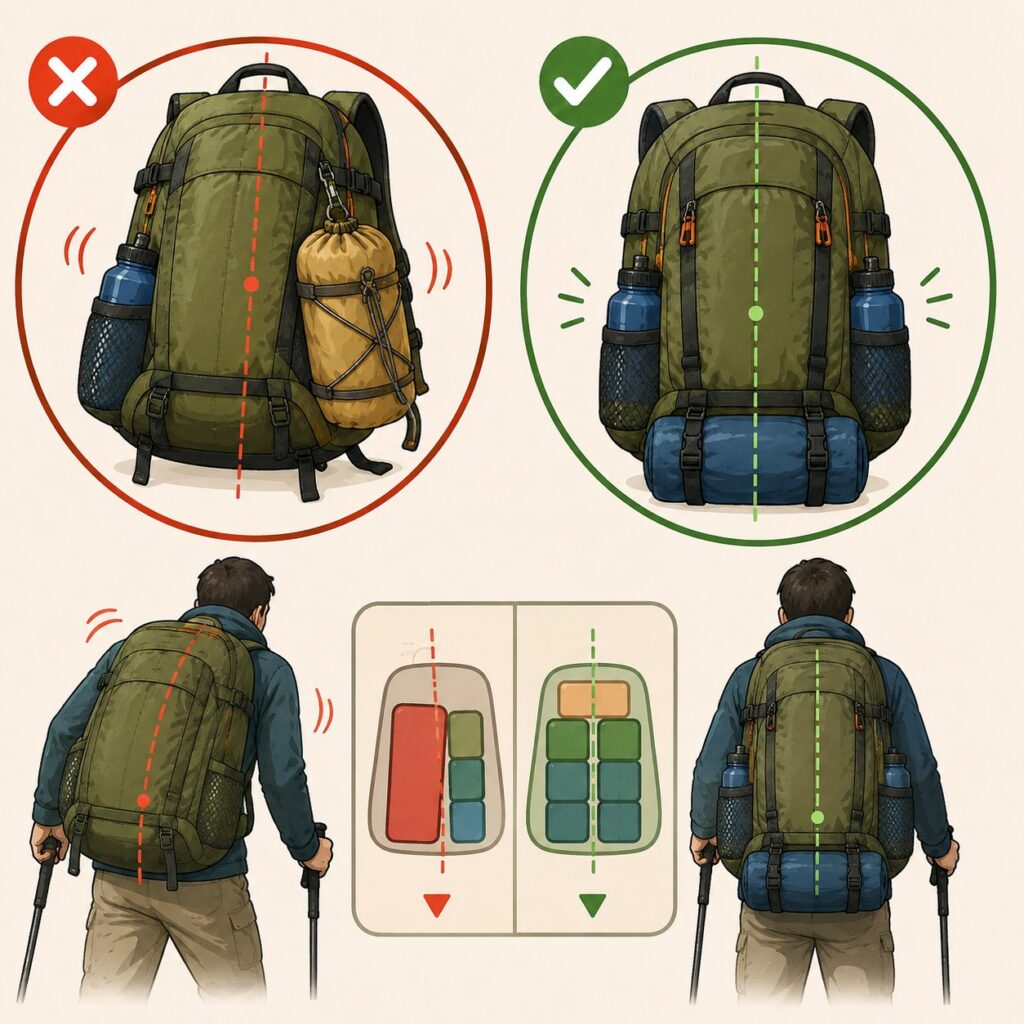
Keep the backpack balanced by distributing weight evenly on both sides.
Place heavier items close to your back for better stability, and check that neither side feels noticeably heavier after packing.
2. Avoid Overpacking
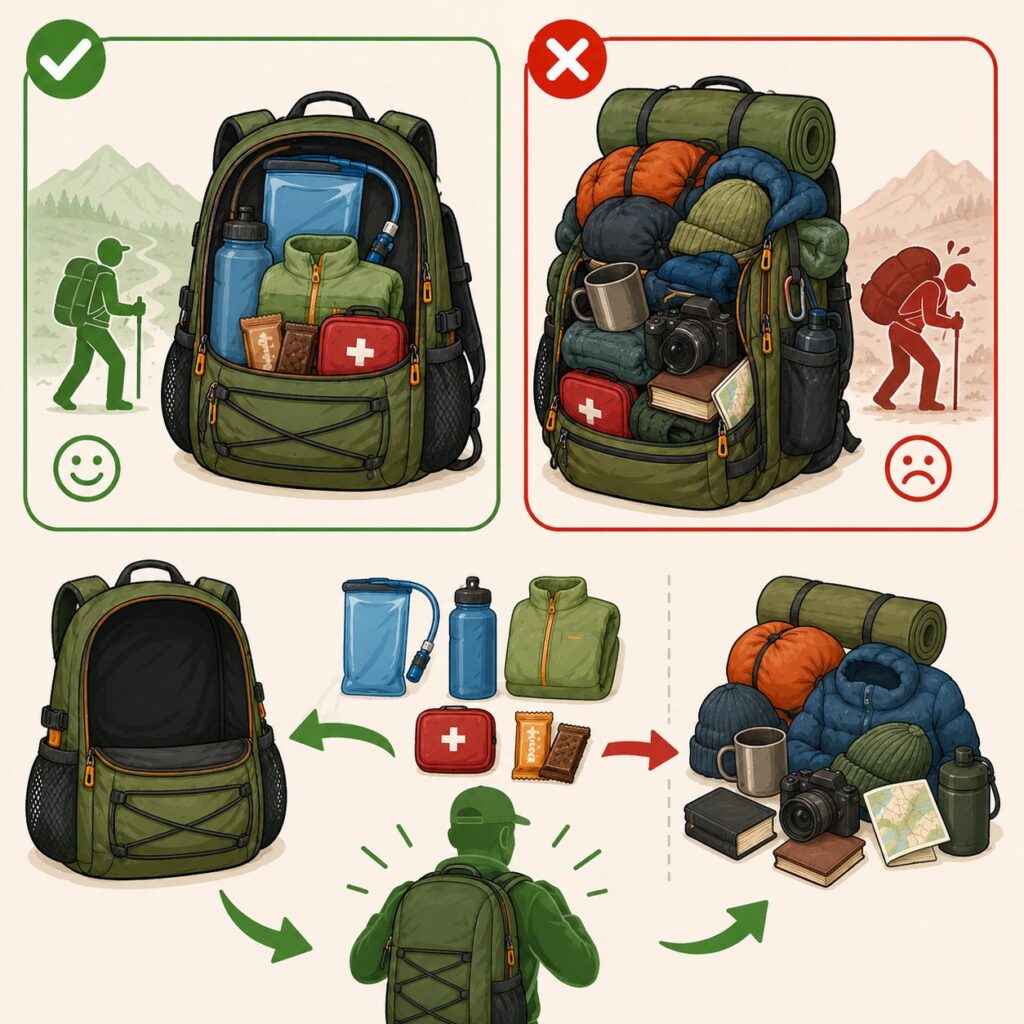
A day hike requires less gear than an overnight trip.
Before leaving, remove anything you are unlikely to use. Ask yourself: Will I really need this during the hike?
Keeping your pack light makes longer hikes more comfortable.
3. Keep Important Gear Dry
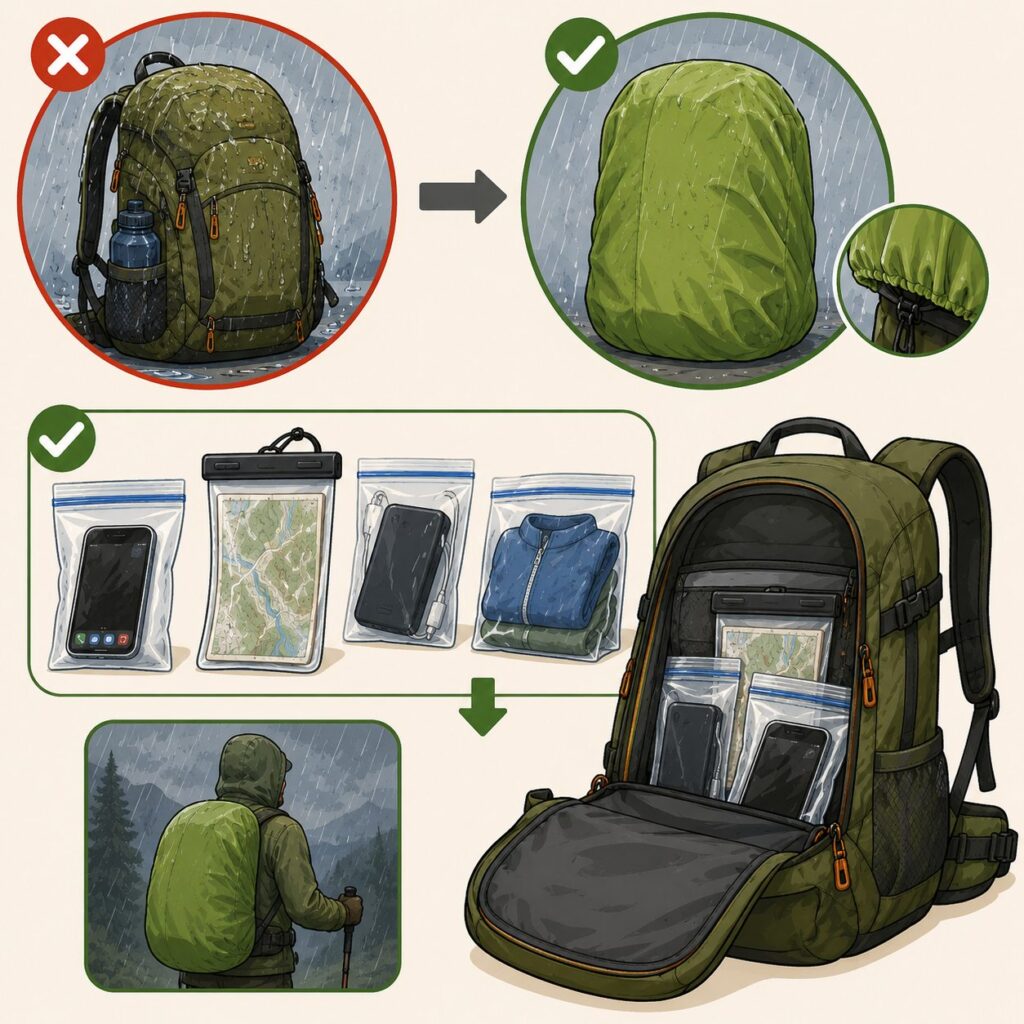
Even water-resistant backpacks are not fully waterproof.
Keep items like phones, maps, power banks, and spare clothing in waterproof bags or pouches. If rain is expected, add a backpack rain cover for extra protection.

4. Pack Food Properly
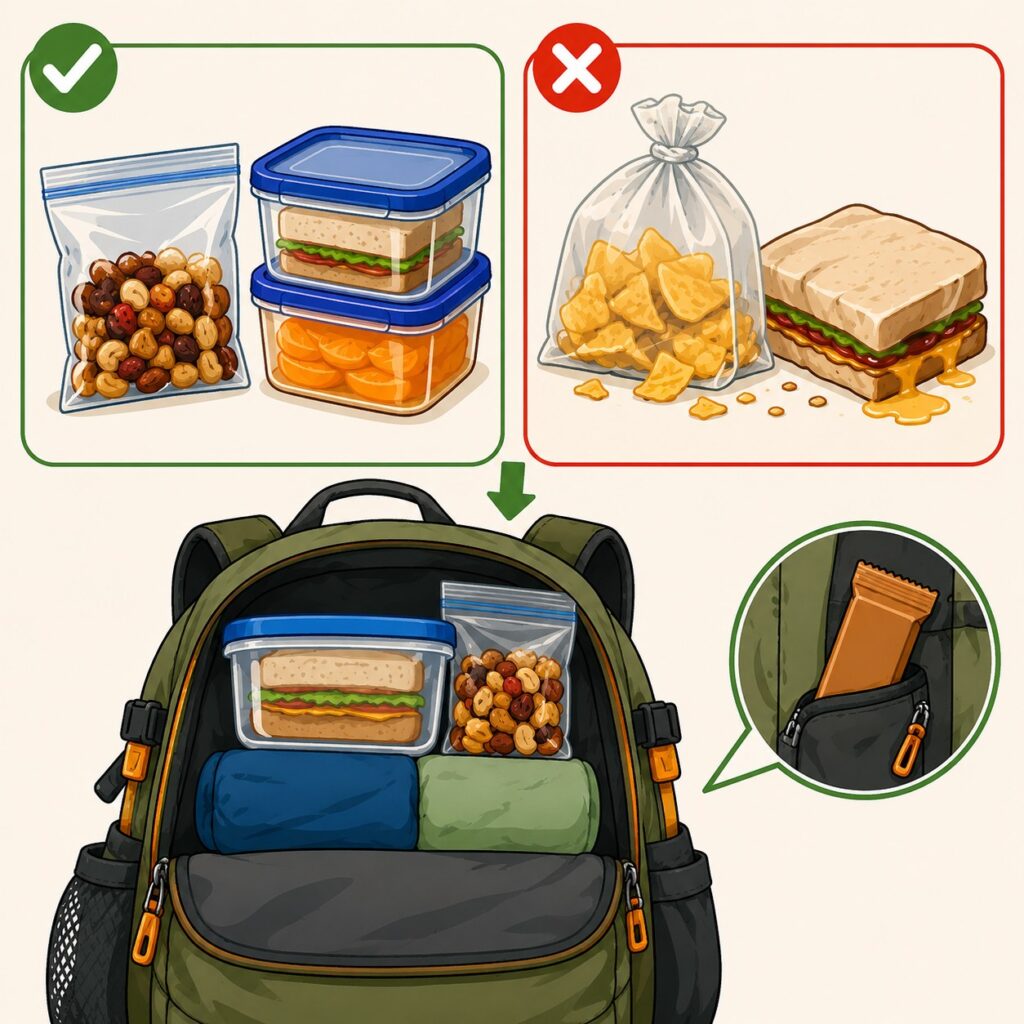
Pack food in sealed bags or containers to prevent leaks and crushing.
Keep fragile food away from heavier items, and place frequently used snacks near the top or in an easy-access pocket.
5. Secure Loose and External Items
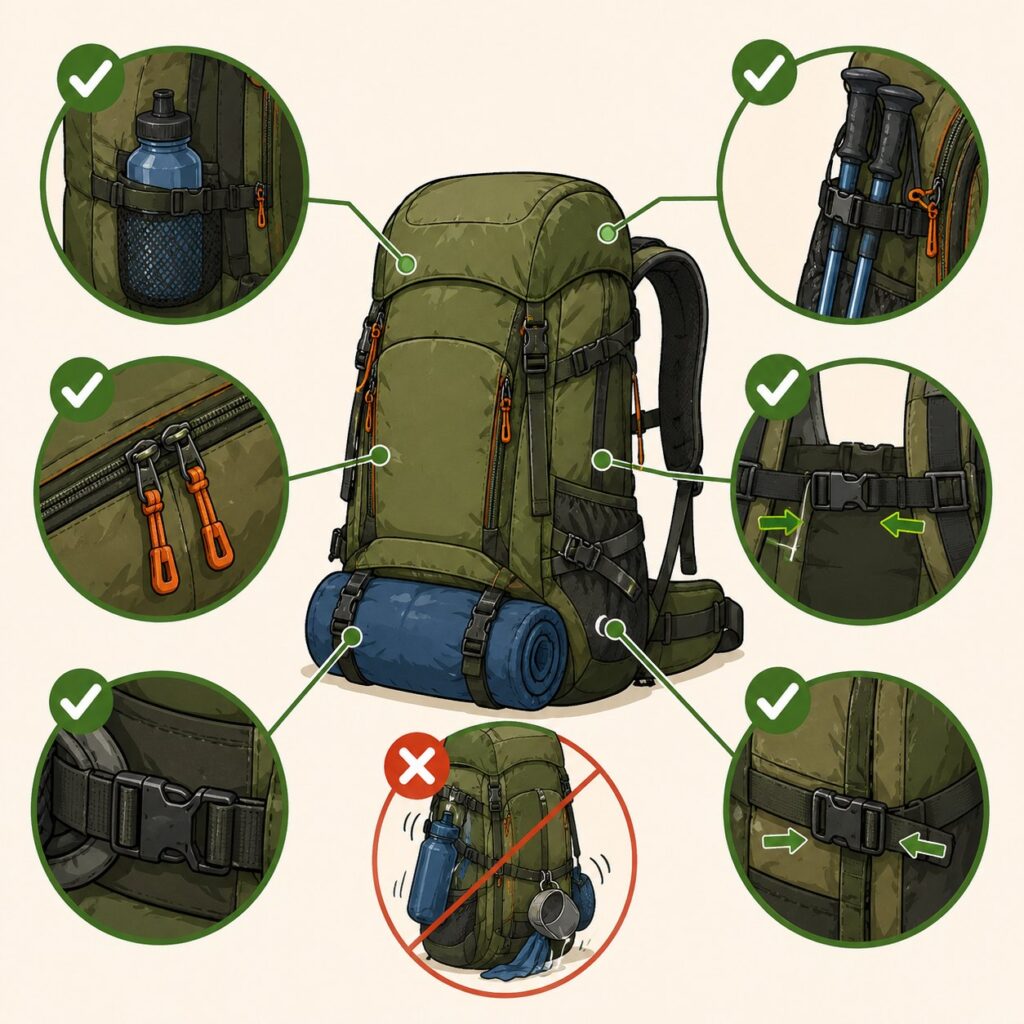
Before hiking, make sure everything is secure: bottles stay in place, trekking poles are firmly attached, zippers are closed, and external straps are tightened.
Avoid loose items that may swing while walking, and keep the backpack compact and stable.
Adjust and Test Your Backpack Before Hiking
A backpack can be packed correctly and still feel uncomfortable if it is not adjusted properly.
Once everything is inside, put the backpack on and adjust the carrying system before heading to the trail.
1. Adjust the Shoulder Straps
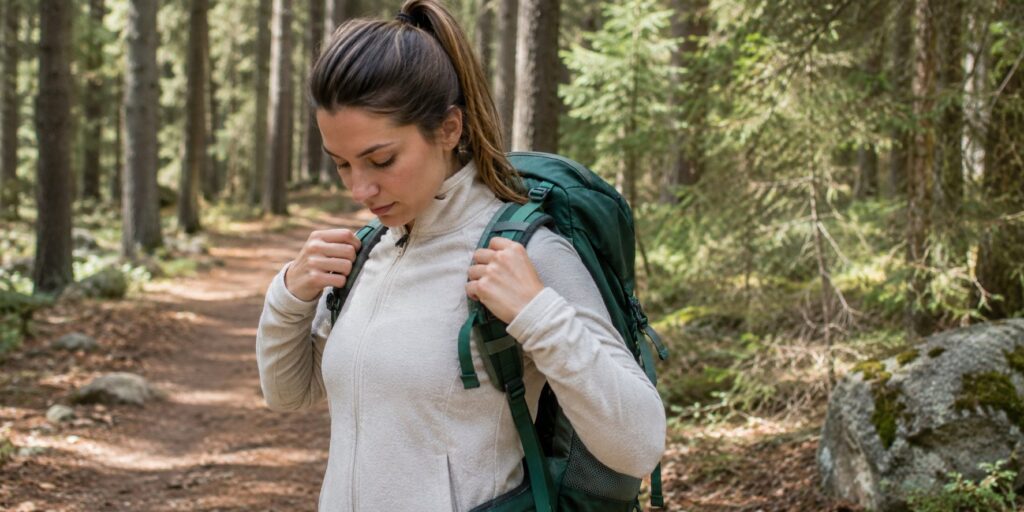
- Tighten the shoulder straps until the backpack sits comfortably against your back.
- They should feel secure without digging into your shoulders or restricting movement.
- Try to keep the left and right straps adjusted evenly.
2. Adjust the Hip Belt
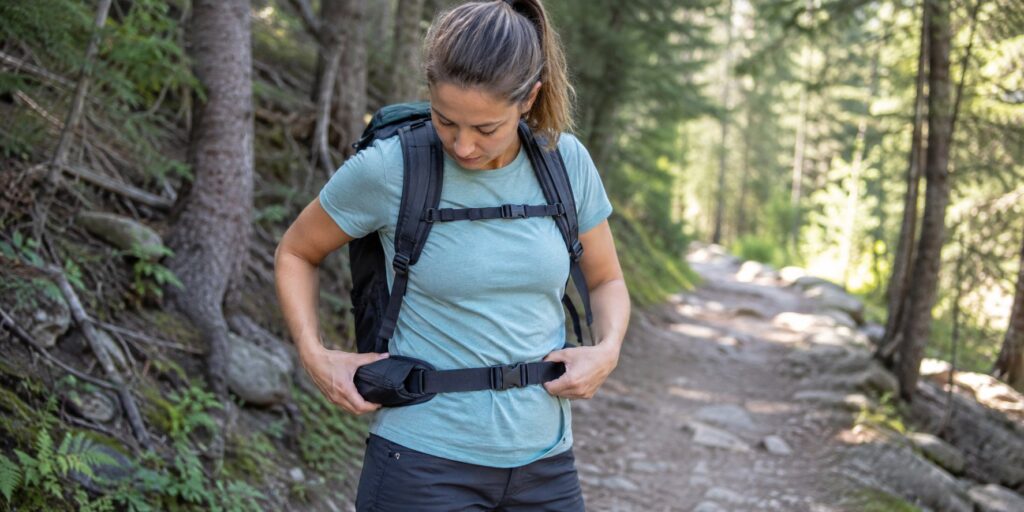
- If your daypack has a hip belt, position it comfortably around your hips.
- A properly adjusted hip belt can help transfer part of the load away from your shoulders, especially when carrying a heavier day-hike load.
- Do not tighten it so much that it limits movement.
3. Adjust the Chest Strap
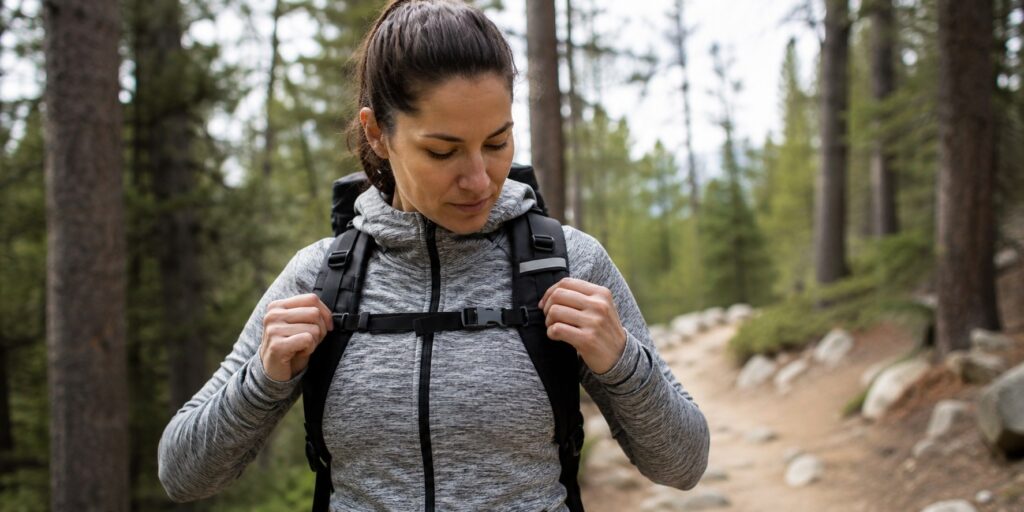
- The chest strap helps keep the shoulder straps in position and can improve stability while walking.
- Adjust it until it feels secure but comfortable. It should not restrict your breathing or chest movement.
4. Test the Fit and Balance
Do not wait until you reach the trail to find out that your backpack is uncomfortable.
After packing, wear it at home for a few minutes. Walk around, climb some stairs, or move naturally with the backpack on.
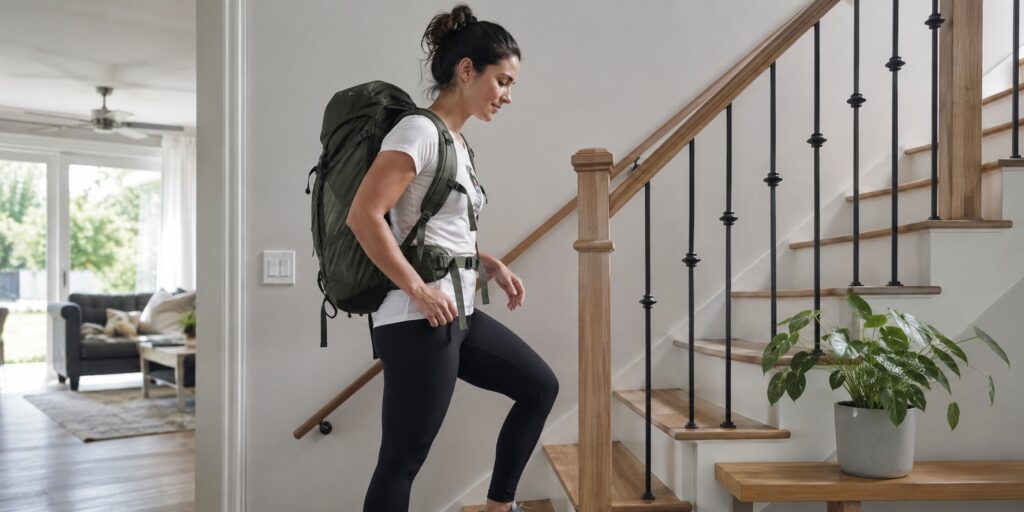
Pay attention to whether:
- The backpack pulls backward
- One side feels heavier
- Items move around inside
- The straps create uncomfortable pressure
- The backpack shifts excessively while you walk
If something feels wrong, reorganize the contents or readjust the straps before leaving.
5. Check Accessibility Before You Leave
Finally, make sure the items you are most likely to use are easy to reach.
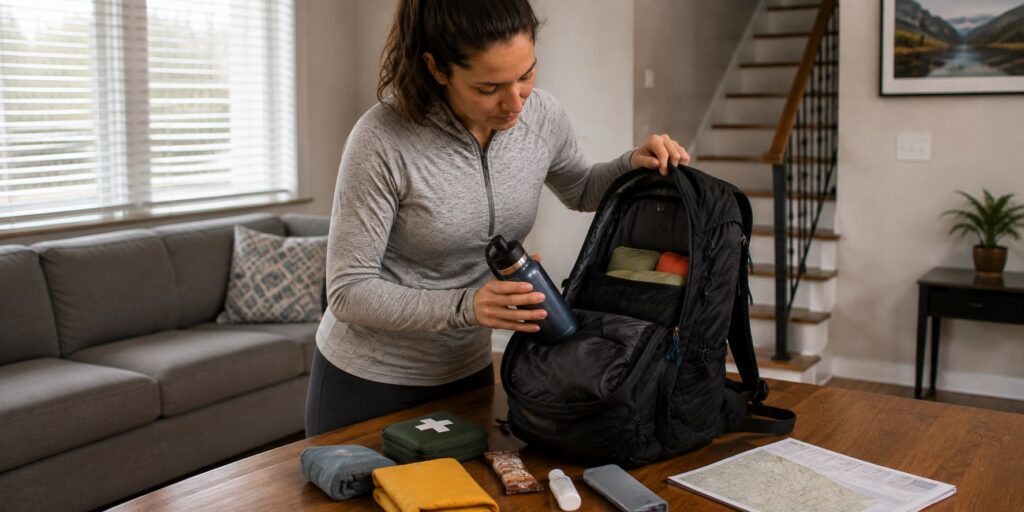
Check whether you can conveniently access:
- Water
- Snacks
- Rain protection
- Sunscreen
- Phone
- Map
- First aid kit
If you have to unpack half the backpack to reach something you will probably use several times, move it to a more accessible location.
Day Hike Packing Checklist
Before you leave, take a moment to remove any non-essential items and keep your pack as light and practical as possible.
The checklist below can help you make sure you have what you need without carrying unnecessary extra weight.
Day Hike Essentials
| Priority | Importance | Items |
| 1 — Essential | ★★★★★ | Water or hydration bladder; |
| 2 — Highly Recommended | ★★★★☆ | Food and snacks; First aid kit; Rain protection; Sun protection; Personal medication* |
| 3 — Recommended | ★★★☆☆ | Headlamp; Essential personal items |
| 4 — Conditions-Based | ★★☆☆☆ | Insect repellent when necessary |
* Personal medication: If you regularly need specific medication, treat it as Priority 1 / ★★★★★.
A final check only takes a few minutes, but it can help you spot forgotten essentials, unnecessary weight, or packing problems before you reach the trail.
FAQ
How Big Should a Backpack Be for a Day Hike?
For most day hikes, a 15–30L backpack is usually enough. (Choosing the Right Size for You)
A smaller pack works well for short, simple hikes, while longer routes, colder weather, or extra gear may require more space.
The goal is to have enough room for essentials without carrying a larger pack than necessary.
Do I Need a Special Hiking Backpack for a Day Hike?
Not always. A regular backpack can work for short, easy hikes, especially if the load is light.
However, a hiking daypack usually offers better shoulder support, ventilation, stability, and easier access to water and small gear, which can make longer hikes more comfortable.
Is a Hydration Bladder Better Than Water Bottles?
Both are good options, and the better choice depends on how you prefer to drink on the trail.
A hydration bladder allows you to drink without stopping, while water bottles are easier to refill, clean, and monitor.
Some hikers use both for added convenience.
Should I Bring Trekking Poles on a Day Hike?
Trekking poles are not necessary for every day hike, but they can be helpful on steep climbs, long descents, rocky trails, or uneven terrain.
They can improve balance and reduce some of the stress on your knees, especially during longer hikes.
Can I Use a School Backpack for a Day Hike?
Yes, a school backpack can work for a short and easy hike with a light load.
For longer or more demanding trails, however, a hiking backpack is usually more comfortable because it offers better weight distribution, ventilation, and support.
Should I Leave Extra Space in My Backpack?
Yes. Leaving some extra space makes it easier to store a jacket, rain layer, or other gear you may remove during the hike.
It also makes the backpack easier to organize and reduces the temptation to pack every available space with unnecessary items.
How Should I Pack Differently for Hot or Cold Weather?
In hot weather, prioritize water, sun protection, breathable clothing, and lightweight layers.
In colder conditions, bring additional insulating layers, gloves, and protection from wind or rain.
Weather conditions can change quickly, so your packing should always match the actual forecast and trail environment.
What Should I Do If My Backpack Feels Too Heavy During the Hike?
Stop and check how the load is distributed before continuing.
Tighten or readjust the shoulder straps, hip belt, and chest strap, and move heavier items closer to your back if needed.
If you are carrying unnecessary items, reducing the load can also make the backpack more comfortable.